
Before a plan
An early childhood partner or local area coordinator can help explain pathways and community connections. The NDIA decides access to funded supports.
Understand NDIS partnersYour knowledge of your own family’s everyday life matters. So do your child’s strengths, preferences and ways of communicating. Coordination begins by bringing these into the conversation.
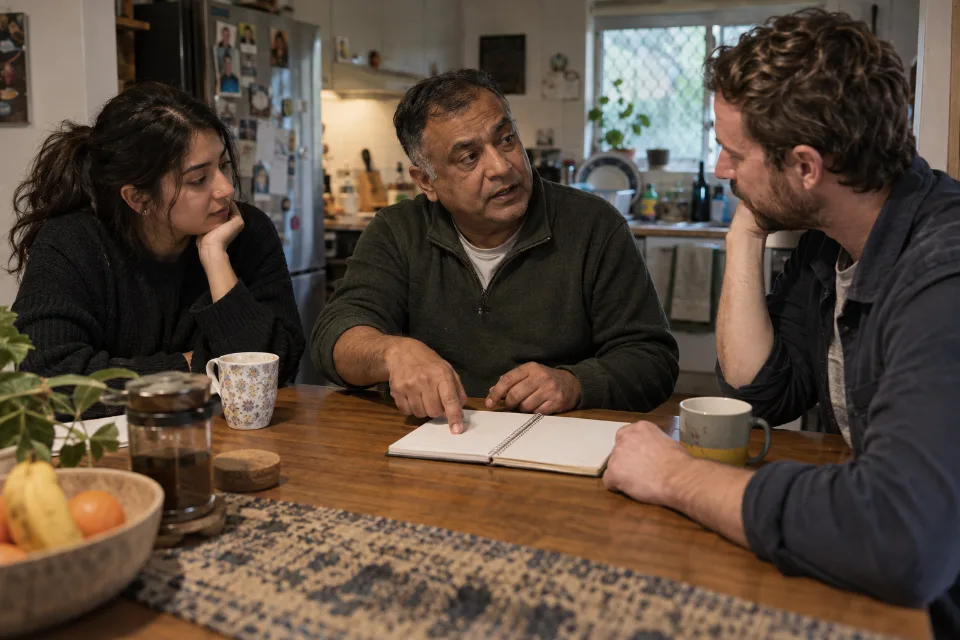
Begin with their preferences and strengths.
Use an ordinary routine as your starting point.
Name a person, an action and a check-in date.

Support in everyday life
A useful family conversation makes space for the person’s preferences and the people they trust. A few clear questions can make the discussion easier to follow.
Prepare a family conversation →What helps them feel comfortable, take part and enjoy their day?
Think about what your child enjoys, the relationships that matter and the situations where support could make a practical difference. A diagnosis does not tell the whole story of a person.
You can describe a typical day, bring questions and ask how to include your child in a way that works for them. Discuss communication, breaks, a trusted person or other arrangements before a meeting.
Prepare a family conversationUse your child’s age, circumstances and the current official guidance to find the right conversation.
An early childhood partner or local area coordinator can help explain pathways and community connections. The NDIA decides access to funded supports.
Understand NDIS partnersThe early childhood approach includes children younger than 6 with developmental delay and children younger than 9 with disability. A diagnosis is not required to start the approach for a child younger than 6; a funded plan has separate access requirements.
Help for your childDiscuss your family’s priorities, the supports in the plan and which practical arrangements need attention. Clarify whether coordination is included and what work can be agreed.
Start with a new planFamilies may be speaking with health professionals, school staff, community services and several providers. It helps to agree which person is responsible for each action and what information they need.
Health, education and the NDIS have different roles. Schools are responsible for teaching and learning adjustments. Clinical assessment and therapy belong with appropriately qualified professionals. Coordination helps organise communication and next steps within its agreed scope.
Choose what can be shared and how the person receiving support will be involved. Ask about consent or authority rather than assuming that every family member receives all information.
A change can be easier to discuss before several arrangements need changing at once.
Describe what will be different, what helps the person feel settled and which existing supports can continue.
Clarify the responsibilities of the school and support providers. Agree who will coordinate the relevant conversations.
Check notice, capacity and a consent-based handover. Keep essential support and the person’s preferences in view.
Revisit who the person wants involved and which choices or tasks they would like to manage themselves.
An introduction with us can start with your everyday experience and what you want to understand next.