
Talk about what matters
Bring the questions you want answered and say what you would like support to make easier. A trusted person can join if you choose.
WORKING WITH TANDIVRA SUPPORT
What matters to you comes first: your priorities, the people you trust and the way you want to communicate. A first conversation with us helps you decide the next step.
Coordination for Greater Sydney by arrangement. Ask us about your suburb, meeting location and current availability.
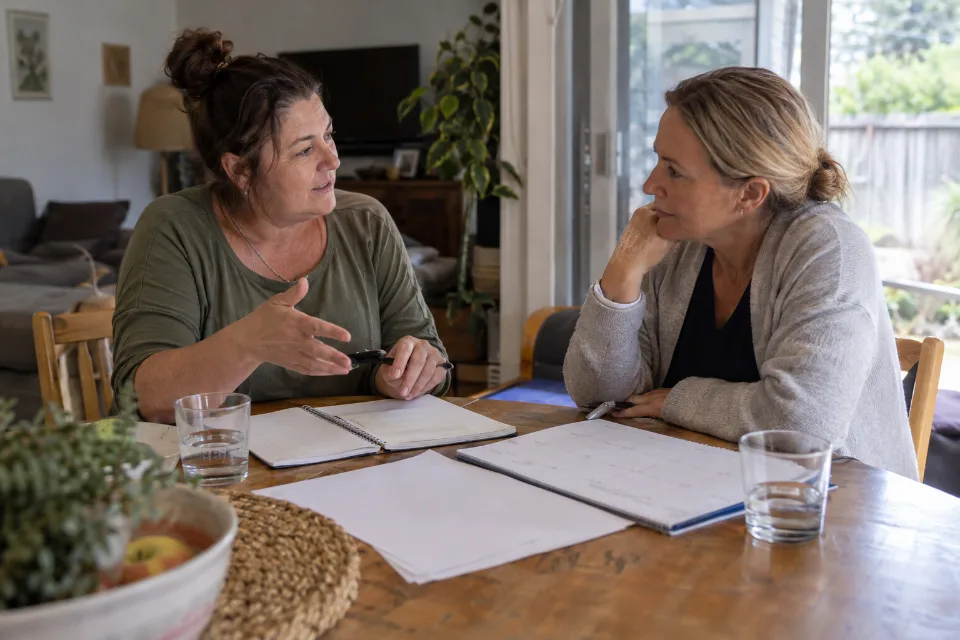
Send a brief topic and contact preference.
Clarify scope, arrangements and any fee.
Confirm actions and a time to check back.
This is a shared process. You can pause, ask a question or review the arrangement as you go.
Start with your priorities and what is working.
Understand choices, roles and what needs agreement.
Agree who will take the next practical action.
Check what helps and what needs to change.
ONE STEP AT A TIME
An introductory conversation clarifies fit and practical arrangements before any ongoing service is agreed.
Bring the questions you want answered and say what you would like support to make easier. A trusted person can join if you choose.
Discuss the type of coordination, who would provide it, capacity, area, costs and how you would stay in touch. We will confirm our scope and provider arrangements.
Take time to decide. Before ongoing work, agree the service terms, responsibilities, consent and the way relevant information will be exchanged.
CONVERSATIONS WE CAN START
These are common areas of support coordination to discuss with us. The work available to you depends on your plan, the agreed scope and provider arrangements.
Which supports are included? What needs attention first? Who can clarify a budget or funding period?
Which options fit your goals, location and communication needs? What would you like to ask providers before deciding?
Who needs to speak with whom, what information can be shared and what is the next agreed action?
Are supports helping in everyday life? Are there missed visits, unclear costs or other issues to raise?
What happens when routines, needs or providers change? What needs to be ready for a smooth handover?
Which parts would you like to manage yourself, and where would guidance make the next step easier?
Read the NDIA’s explanation of support coordination . Coordination does not replace clinical assessment, therapy or NDIA funding decisions.
YOUR PEOPLE, YOUR CHOICE
You choose who is involved and what you share. Tell us about language, communication or access needs before the appointment.
Bring your own priorities and questions. You can ask someone you trust to join, compare your options and take time before agreeing to a service.
First-conversation prompts →Start with your child’s strengths, preferences and everyday routines. Include their voice in ways that work for them and discuss the people already involved.
Family prompts →Start with the person’s permission or appropriate authority. Contact us to check fit and availability, then agree a suitable way to exchange any further information.
How to introduce someone →A RESPECTFUL INTRODUCTION
Contact us first to discuss whether we can help. In an initial enquiry, provide your own contact details and a brief request to discuss a referral.
Check that the person understands and agrees to the introduction, or confirm the authority under which you are contacting our coordinator. Agree how the person would like to take part.
Keep NDIS numbers, plan documents, diagnoses and health reports out of the initial enquiry. Any further information should be shared through a method agreed with us.
Discuss a referralBEFORE YOU SAY YES
You can compare coordinators and providers. Ask about business relationships, available alternatives and the reasons for a recommendation. The final choice remains yours.
If an arrangement is not working, discuss the problem and what needs to change. Check notice terms and organise a handover so essential supports can continue.
Questions to ask providers →LET’S TALK
Monday–Friday, 9am–5pm, Sydney time. Online introductions are 30 minutes; in-person meetings and weekends are arranged directly with us.